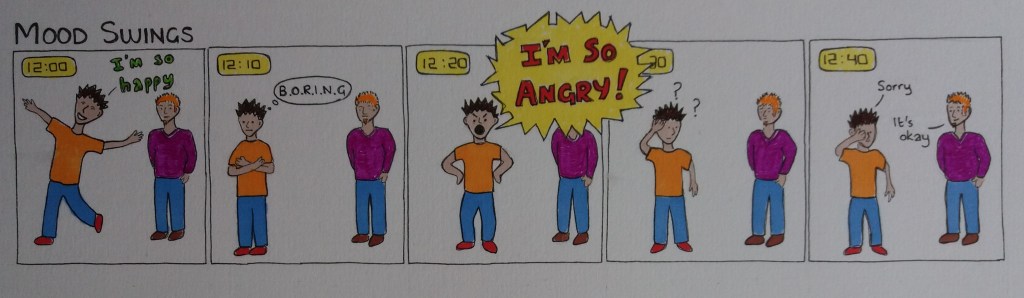
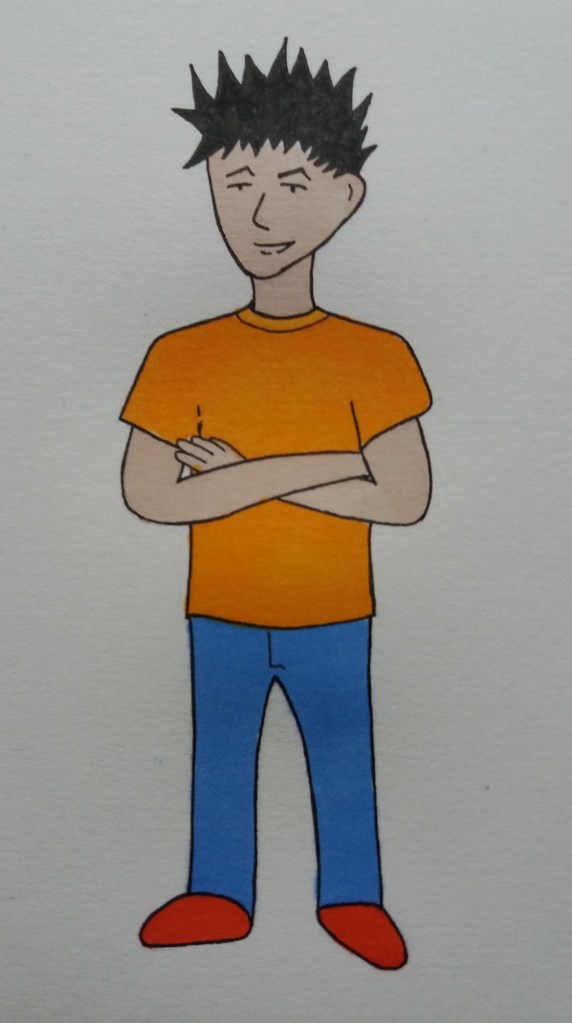
The brief for this exercise is to produce: a cartoon strip of up to five frames to explain to young teenagers how to cope with an aspect of the onset of puberty; and a single illustration of the character from the cartoon strip for use on the front cover of a pamphlet. The title of the leaflet is ‘What’s happening to my body? It’s all going mad’.
I began by brainstorming aspects of puberty to illustrate in the cartoon. I quickly hooked onto the idea of focussing on emotions, in particular mood swings. An initial idea when I was brainstorming was to have a teenage character having a different emotion to a second character in each panel of the cartoon and then the second character giving a positive message in the final panel. I quite like this idea although it needs development.
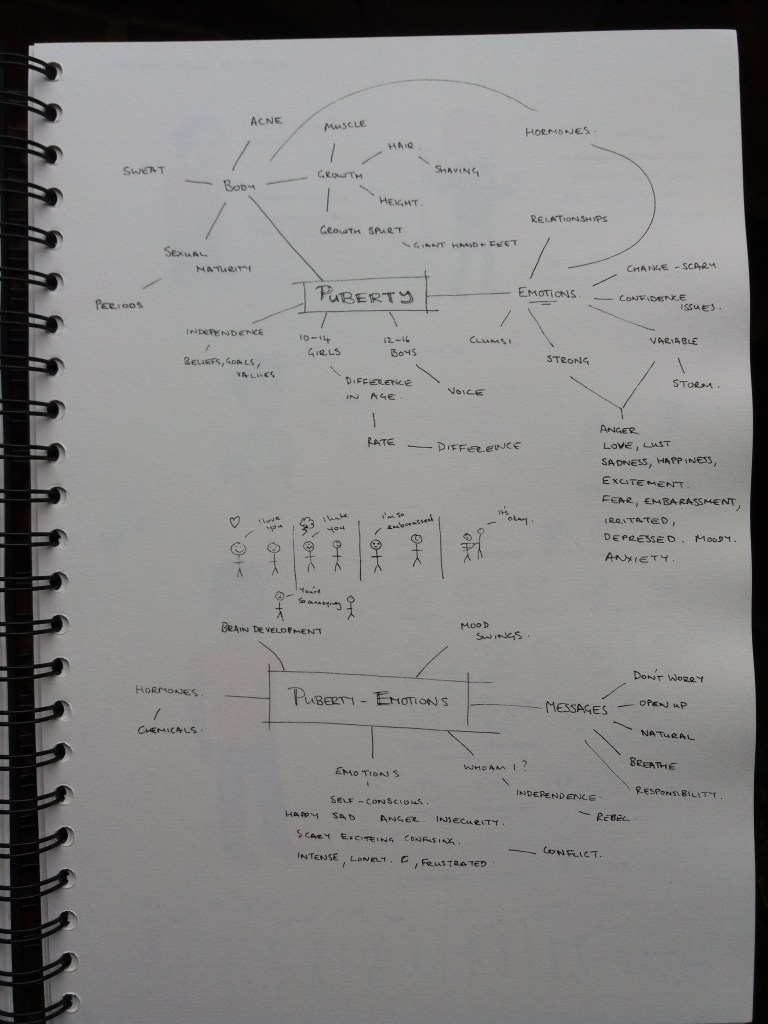
I think it will help to develop the characters and see how the idea evolves. I’m going to take a look at cartoon styles for young teenagers. I’m thinking of having one teenage character who needs to be able to express lots of different emotions and one other character – adult, animal – that just looks empathetic and caring.
I scrolled through examples of cartoon characters that are aimed at young teenagers. It was notable that the characters are dominantly human, rather than the animals etc aimed at younger ages. They’re also more realistic depictions of humans than cartoons aimed at younger age groups. The cartoons tend to depict teenagers, slightly older than the targeted audience, in bright colours wearing trendy clothes. Given that my character is going to be exhibiting lots of different emotions I should start looking into facial expressions and body stances that indicate different emotions.
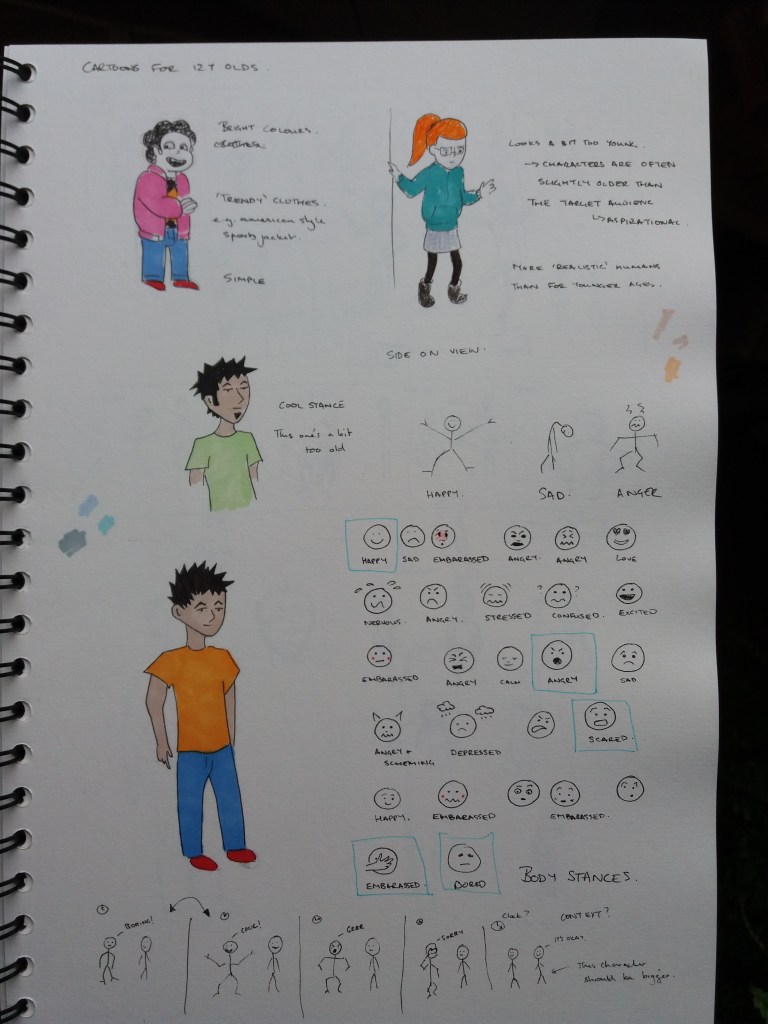
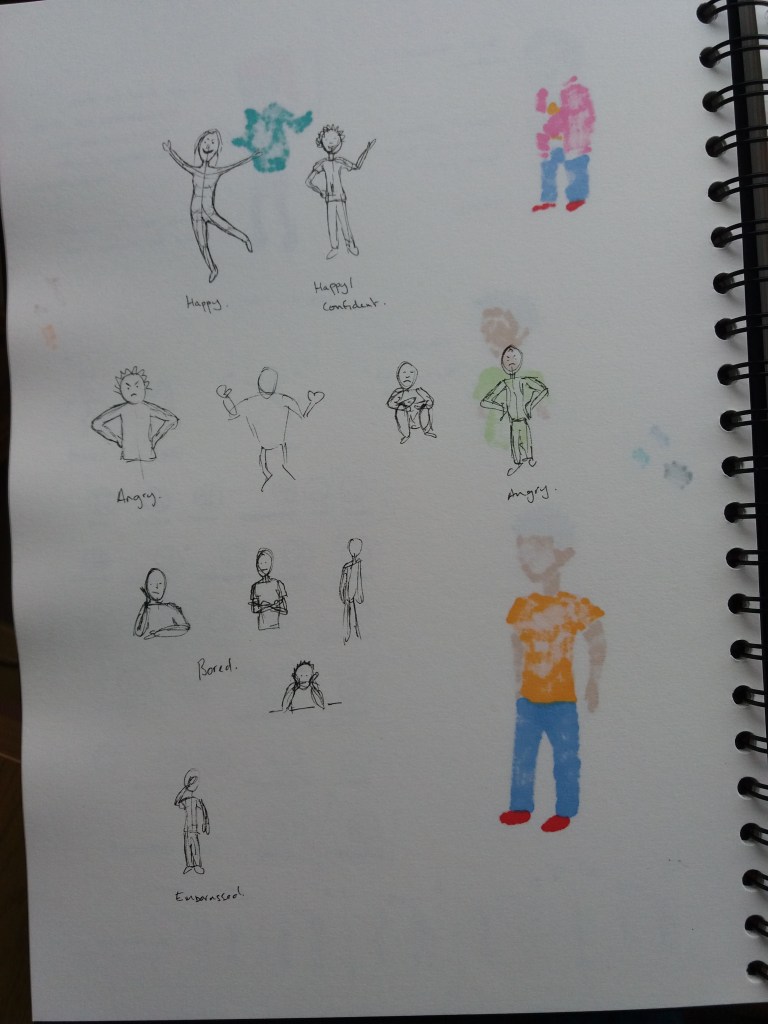
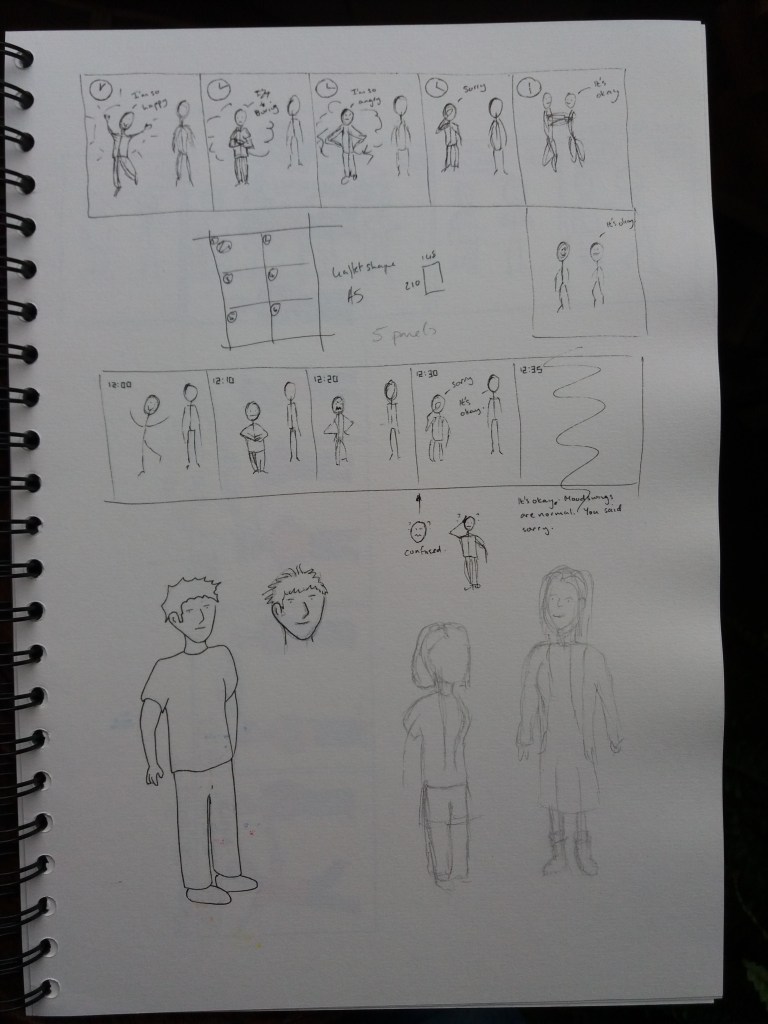
The focus of the images is going to be facial expression and posture in order to convey emotion with minimal words. I researched and sketched some quick ideas about posture before thinking more about the narrative of the cartoon strip. I soon realised that I needed to think about the second character. I was in a quandary for a while as to what gender both the teenage and adult characters should be as it’s a topic relevant to all teenagers. In the end I decided on male simply because I liked the male character that I’d drawn. I think the second character should look like an older version of the first but with a calm persona. That way it is ambiguous as to whether the character is an older brother, parent, or someone else. I think it makes sense to not make the character too parenty – but just an older role model. I think that the amount this character says should be minimal – teenagers (and other people) don’t generally want to be preached to.
I’m envisioning that this pamphlet has a whole series of short cartoons in it. Therefore, I’m going to keep the cartoon as a strip, rather than making it pamphlet sized. I’m going to have a look at cartoon styles and how to integrate images from one panel to the next. My current thumbnails aren’t very dynamic.
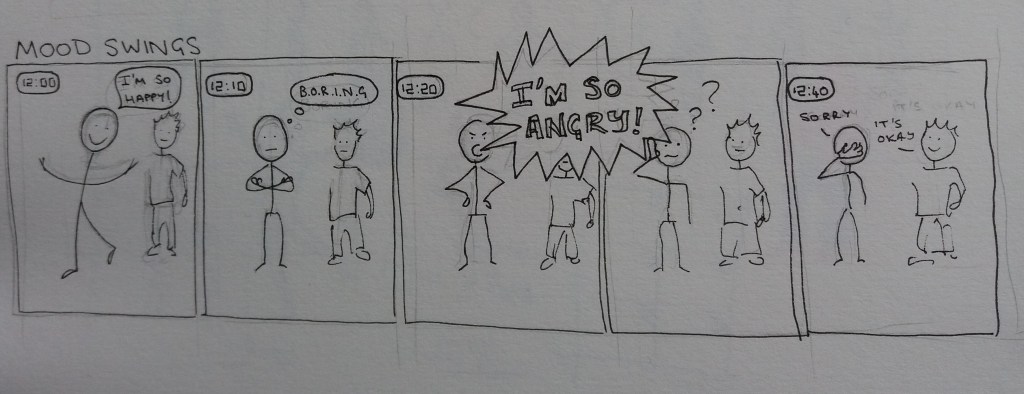
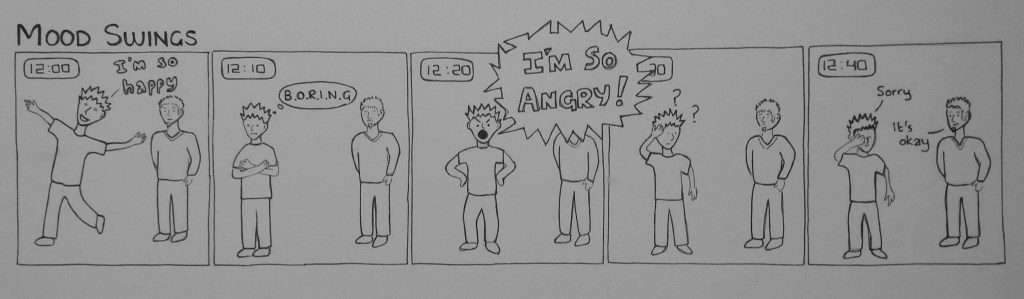

Elements of the cartoon strip that I think work quite well are the narrative, chronology – using the clock, and use of different fonts to help express emotion. I enjoyed learning about facial expressions and posture to show emotions. I think the style of the cartoon strip isn’t particularly exciting. There’s too much white space. I considered including a background; however, I decided that it would detract from the image.
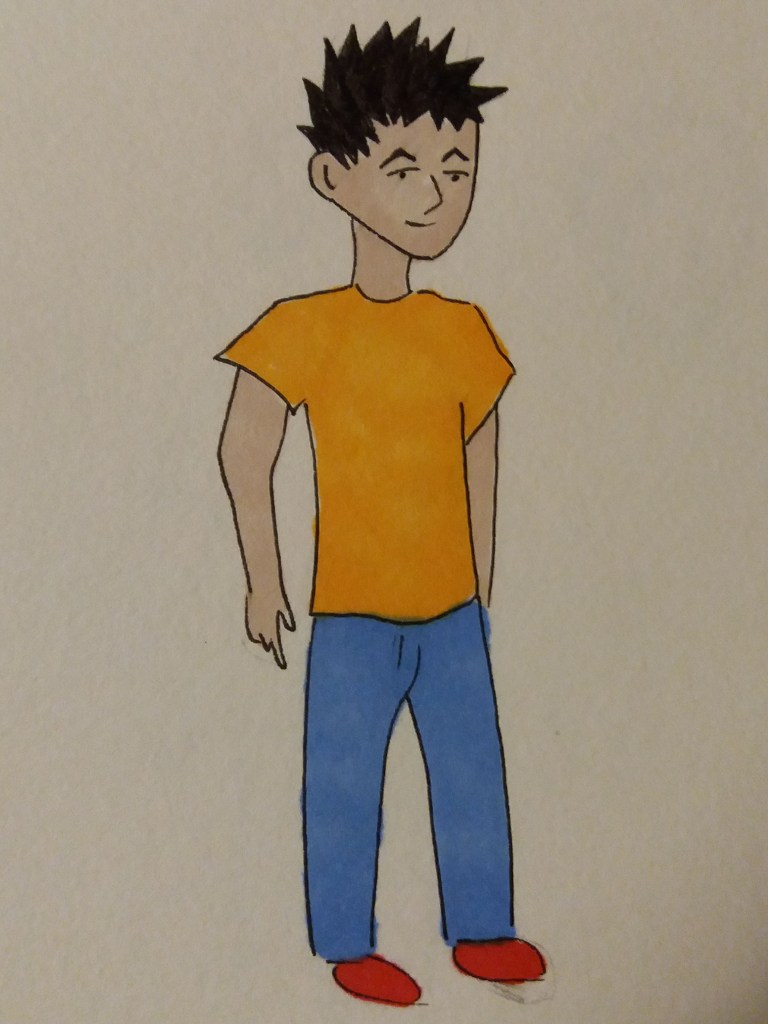
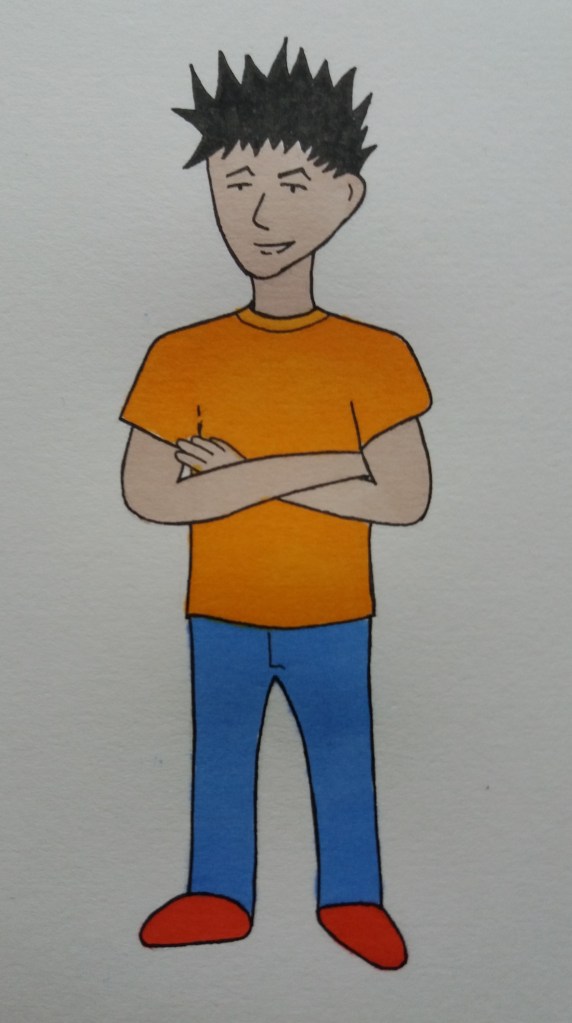
Now I need to consider what the character on the front of the pamphlet should look like – what emotion should he be showing in order to appeal to young teenagers to look at the pamphlet. I decided to try to make him look confident and experimented with different confident postures.
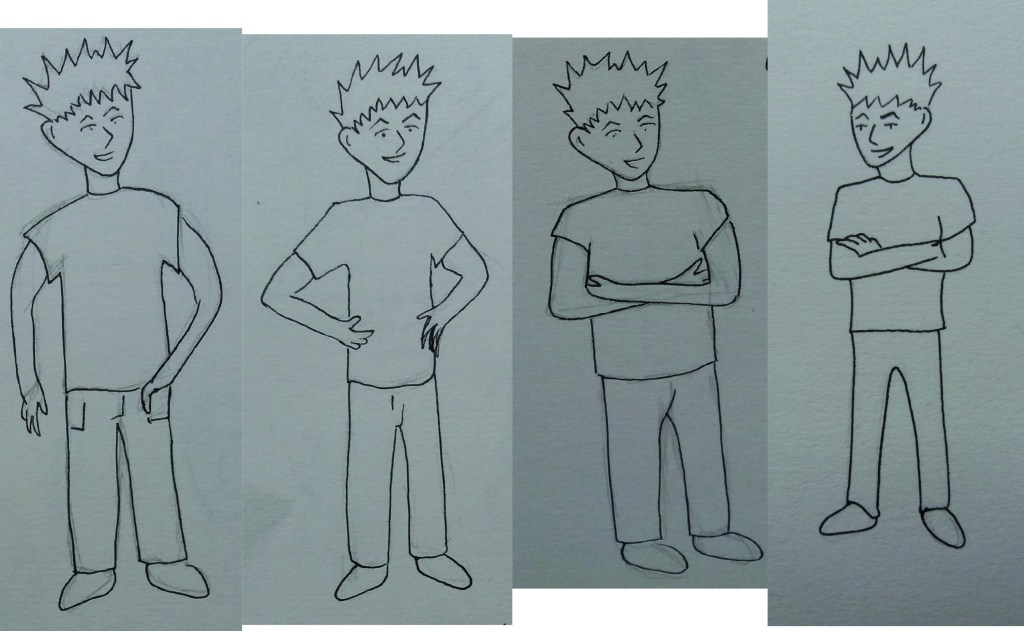
My final character is rather simple. However, his simplicity does make it easy to manipulate his body into different postures to show emotion.







 Esther's OCA Blog